

Why Do Japanese People Say, “Put Yourself in the Other Person’s Place”? — Moving the Observation Point: A Cultural Pattern Found in Japanese Language and Classics
Why do Japanese people say, “Put yourself in the other person’s place”? Exploring Japanese language, classical literature, Yohaku, Wa, and Musubi, this essay reveals a cultural pattern of moving the observation point—from self to other, past to future, and Entity to Relation—and considers what it may offer for the civilization of the future.
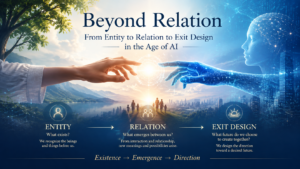
Beyond Relation: From Entity to Relation to Exit Design in the Age of AI
Beyond Relation proposes the Entity–Relation–Exit Design Framework for rethinking personality, Human–AI interaction, and civilization by moving the observation point from what exists, to what emerges between us, and toward the future we choose to create together.
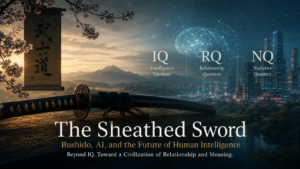
The Sheathed Sword ― Bushido, AI, and the Future of Civilization
Artificial intelligence may surpass human IQ, but does that define the future of humanity? Through Bushido, Exit Design, and a new framework of IQ, RQ, and NQ, this essay redefines singularity and explores the next civilization.
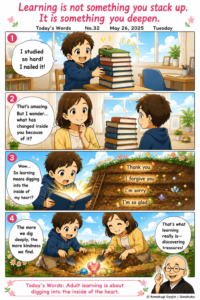
The Treasure That Grows the More We Dig----Learning, Relationships, and the Phase Transition of Civilization
A reflective essay on learning, AI, relational value, and civilizational change. True learning is not accumulation, but deepening—and the future may begin with people digging together.
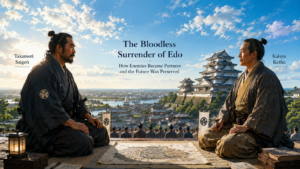
Justice, Conflict, and the Japanese Way of Ending War
A reflection on Bushido, Western justice, Saigo Takamori, and the bloodless surrender of Edo, exploring Japan’s wisdom of ending conflict without destroying the future.

EXIT Design: From Victory to Sustainable Closure
A new perspective on leadership and governance: EXIT Design. Moving beyond victory and punishment, this article explores how designing sustainable closure can prevent conflict, restore relationships, and build lasting social stability.