(時には意味がある──日本の干支と新年)
In Japan, the New Year marks more than the passing of another date on the calendar. It is a moment of renewal, when time itself is understood as a meaningful flow rather than a simple sequence of numbers. Through traditions such as the Japanese zodiac, Eto, people reflect on change, continuity, and hope — not by predicting the future, but by listening carefully to the rhythm of time.
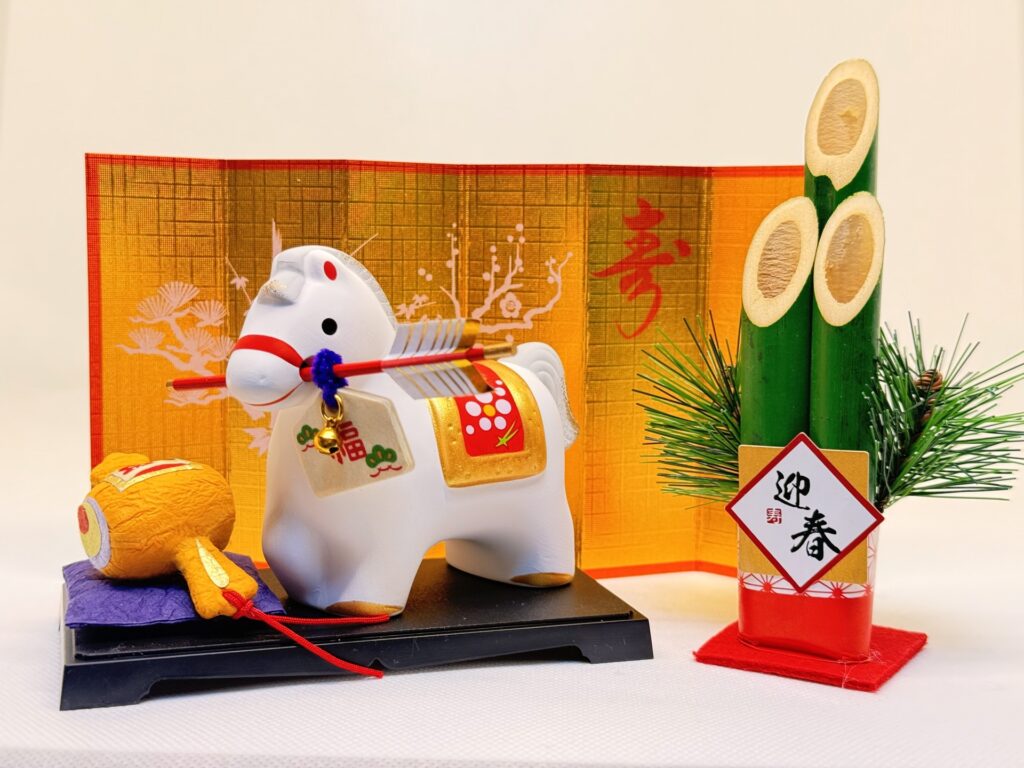
Discover how Japan understands the New Year through the Japanese zodiac. This essay explores Eto not as fortune-telling, but as a cultural language for reading time, change, renewal, and quiet hope.
Ⅰ. Introduction : New Year in Japan: More Than a Celebration
In Japan, the New Year is more than a festive occasion.
It is a moment of renewal — a time to reset one’s heart, one’s relationships, and one’s way of living.
Rather than focusing only on numbers or dates, Japanese culture has long valued the flow of time.
The passing of a year is understood not simply as something that ends, but as a transition into a new phase, carrying meaning and direction.
This perspective is reflected in many New Year customs: cleaning the home, visiting shrines, sharing special foods, and quietly reflecting on the year ahead.
These practices are not about predicting the future, but about aligning oneself with the rhythm of time and beginning again with clarity and intention.
At the heart of this way of thinking lies the Japanese zodiac, Eto.
Far from being a form of fortune-telling, it offers a cultural language for understanding how time moves, changes, and matures.
Ⅱ. Body 1 – What Is Eto? : The Japanese Zodiac as a Cultural Language
In Japan, the zodiac known as Eto is often misunderstood as a form of fortune-telling.
In reality, it is something quite different.
Eto is a cultural system for reading time itself.
It is based on a combination of two ancient sets of characters: the Ten Heavenly Stems (Jikkan) and the Twelve Earthly Branches (Junishi).
Together, they form a cycle of sixty patterns, each expressing a particular quality or movement of time.
These characters were not chosen arbitrarily.
They are rooted in pictographs and symbolic forms that describe growth, transformation, completion, and transition.
Rather than predicting personal luck, Eto offers a way to observe how energy develops, matures, and changes within a given period.
When the sixty-year cycle is completed, time is said to “return to its origin.”
This is why the age of sixty is called Kanreki in Japan — a rebirth, not an ending.
It reflects a worldview in which time is circular, meaningful, and deeply connected to human life.
Seen this way, the Japanese zodiac functions as a language — not of fate, but of flow.
It helps people reflect on where they stand within a larger rhythm of time and history.
Ⅲ. Body 2 – The Meaning of Hinoe-Uma (2026) : 2026: A Year When Change Becomes Real
The year 2026 corresponds to Hinoe-Uma in the Japanese zodiac.
The character Hinoe (丙) represents a firm foundation or base — something that supports and sustains what is to come.
It suggests a stage where underlying structures are prepared, strengthened, and made ready to carry real weight.
The character Uma (午), on the other hand, signifies a clear turning point.
Just as noon divides morning and afternoon, Uma symbolizes a moment when direction becomes visible and movement shifts from preparation to expression.
Together, Hinoe-Uma describes a year in which changes that began earlier take solid form.
What was once only emerging or growing beneath the surface becomes visible, tangible, and established in reality.
In this sense, 2026 is not a year of sudden upheaval, but one of realization.
It is a time when prior efforts, quiet shifts, and gradual transformations finally find their place as something concrete and enduring.
The Japanese zodiac does not claim to predict events.
Rather, it offers a way to recognize when the flow of time moves from potential into form — from preparation into manifestation.
Ⅳ. Body 3 – History as Evidence, Not Prediction : When History Speaks: 1906 and 1966
The Japanese zodiac does not reveal its meaning through prediction, but through reflection.
Its value becomes clear when we look back and observe how history actually unfolded.
Two previous years of Hinoe-Uma — 1906 and 1966 — offer striking examples.
In 1966, Japan stood at the height of rapid economic growth.
It was a year remembered not only for social anxieties surrounding the zodiac, but more importantly for profound cultural and economic transformation.
International travel expanded, new forms of entertainment emerged, consumer culture took root, and everyday life changed in ways that would define modern Japan.
Looking back, this year marked the solidification of changes that had been building quietly beneath the surface.
What had once been experimental or unfamiliar became normal, stable, and widely shared.
A similar pattern can be seen in 1906.
This was a year of institutional formation and global realignment — railways, political movements, and new ideas about society and governance began to take concrete shape.
Within the following decades, these foundations would lead to major shifts in international standing and national identity.
In neither case did people know, at the time, exactly what these changes would lead to.
Only afterward did the flow become visible.
This is how the Japanese zodiac works:
not as a tool for foretelling events, but as a lens through which patterns in time can be recognized — quietly, patiently, and only in hindsight.
Ⅴ. Conclusion : A Quiet but Confident Hope
Hope in Japanese culture is often quiet, but it is never weak.
Rather than expecting dramatic change, it trusts in steady growth — the kind that nurtures individuals, families, and society at the same time.
Personal effort is not separated from the well-being of others; the two are understood as deeply connected.
This is why the New Year in Japan is welcomed with calm reflection rather than loud celebration.
By caring for one’s daily life, one’s relationships, and one’s inner balance, people prepare the ground for a better future to take root naturally.
Seen in this light, the Japanese zodiac is not about optimism or pessimism.
It is about attentiveness — listening to the flow of time and responding with care, patience, and responsibility.
As a new year begins, this quiet confidence offers a gentle but enduring blessing:
that through small, sincere efforts, something lasting and meaningful may grow.