

Why Do Japanese People Say, “Put Yourself in the Other Person’s Place”? — Moving the Observation Point: A Cultural Pattern Found in Japanese Language and Classics
Why do Japanese people say, “Put yourself in the other person’s place”? Exploring Japanese language, classical literature, Yohaku, Wa, and Musubi, this essay reveals a cultural pattern of moving the observation point—from self to other, past to future, and Entity to Relation—and considers what it may offer for the civilization of the future.
Why We Can’t Choose in an Age of Infinite Choice — What a Convenience Store Reveals About How We Live
In an age of infinite choices, why do we struggle to decide? Using the example of Japanese convenience stores and digital recommendation systems, this article explores the shift from inner standards to external validation, the difference between choosing and deciding, and how concepts like Bushido and Shirasu offer a path toward intentional living.

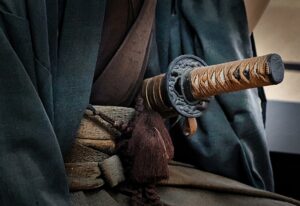
Bushido Beyond the Sword — Power, Restraint, and the Art of Standing
What if civilization is not defined by winning arguments, but by how we stand when we have power? Exploring Bushido, Shisei, and The Tale of the Bamboo Cutter, this essay examines restraint, dignity, and the moral discipline that sustains mature societies.

A Ghost Story That Shaped a Nation’s Words — Learning Bushido Beyond the Sword
How a classic Japanese ghost story shaped modern Japanese language and revealed a side of Bushido beyond the sword—restraint, responsibility, and balance in an age of endless voices.
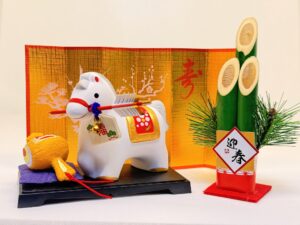
Time Has Meaning : The Japanese Zodiac and the New Year
Discover how Japan understands the New Year through the Japanese zodiac.
This essay explores Eto not as fortune-telling, but as a cultural language for reading time, change, renewal, and quiet hope.
Why Debates Don’t Change the World — and Dialogue Does
Why debates fail to create real change — and why the Japanese tradition of hanashiai (constructive dialogue) offers a powerful blueprint for the future of human civilization.