(なぜ討論は世界を変えないのか──話し合いは変えるのに)
Everywhere in the modern world, people argue.
Panels argue, politicians argue, even communities argue — yet very little truly changes.
It made me wonder: Is debate actually the wrong tool for solving real problems?
After appearing on a televised debate program, I realized something simple but profound:
debate and dialogue belong to two entirely different civilizations.
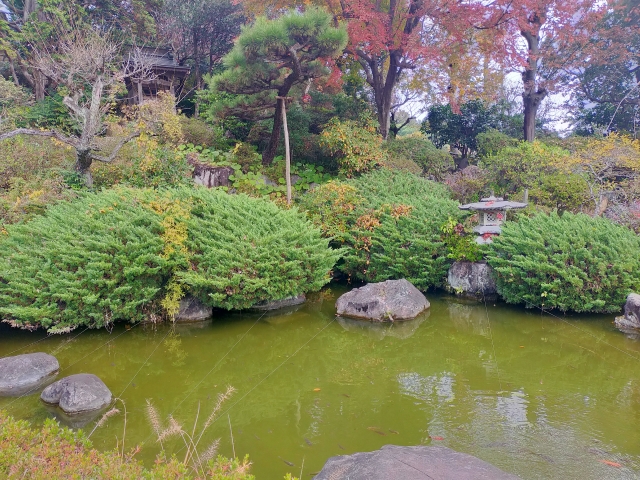
A serene Japanese garden with a green pond, rounded shrubs, autumn-colored trees, and a stone lantern nestled among the foliage.
Ⅰ. Discussion vs Dialogue — Two Civilizations in One World
Looking back on that debate program, one realization stood out above all:
Debate and dialogue are not two styles of communication.
They are two different civilizations.
The English word discussion comes from the Latin discutere, meaning
“to strike apart, to break into pieces.”
This reveals something essential:
Debate was never designed to build. It was designed to win.
In a debate, the purpose is unmistakably clear:
• expose the opponent’s contradictions,
• overpower them with logic,
• prove that my side is correct.
Even if the discussion lasts for hours,
even if brilliant points are exchanged,
nothing moves forward unless someone “wins.”
And because both sides almost never yield, the outcome is predictable:
noise without movement,
arguments without progress.
Japan, however, cultivated a completely different tradition.
The word 「話し合い」 (hanashiai) does not mean
“to attack with words,”
but “to bring words together.”
Dialogue, in the Japanese sense, begins with shared purpose:
• Why are we gathered?
• What outcome do we truly need?
• What circumstances must we respect?
• How can we ensure no one is harmed by the decision?
Dialogue does not seek victory.
Dialogue seeks a path that allows everyone to move forward.
That is why I call them two civilizations:
• The Civilization of Debate — where conflict defines intelligence.
• The Civilization of Dialogue — where harmony creates wisdom.
And only one of these can build the future.
Ⅱ. Why Debate Fails to Change Anything
For decades, societies have believed that heated debate leads to progress.
Television programs gather experts to argue for hours.
Politicians clash dramatically on stage.
Social media amplifies every disagreement into a storm.
And yet, almost nothing changes.
Why?
Because debate does not exist to move reality.
Debate exists to win.
In a debate format, progress is structurally impossible:
• each side enters already convinced they are right,
• yielding is seen as weakness,
• admitting uncertainty is unthinkable,
• performance matters more than truth.
Even if the audience feels excited or impressed,
the moment the debate ends, everyone walks away unchanged.
No decision has been made.
No shared direction has formed.
No action will follow.
Some countries have broadcast debate shows for over thirty years.
Night after night, voices clash on screen.
But look closely:
not a single policy has shifted because of them.
not a single social issue has been resolved.
Debate generates heat, not movement.
Noise, not direction.
Emotion, not progress.
That is why:
A hundred years of debate will not create even one step forward.
If the world is to move,
we must use a different tool.
Ⅲ. Why Dialogue Works — The Japanese Tradition of Harmony
If debate creates heat without movement,
dialogue creates movement without heat.
In Japan, dialogue was never a battlefield.
It was a place where voices were brought together to form a shared path.
Far from passive, this was one of the most sophisticated forms of collective intelligence in the world.
For centuries, Japanese villages were governed not by majority vote,
nor by loud voices,
but by consensus —
the calm, steady art of finding a direction everyone could walk together.
Dialogue begins not with “I am right,” but with deeper questions:
• What outcome will allow the community to move forward?
• How can each person’s circumstances be respected?
• What solution reduces harm for everyone?
• What action can all of us begin tomorrow morning?
Dialogue is not a performance.
Dialogue is a commitment to action.
That is why it works.
• Debate seeks victory.
• Dialogue seeks continuity.
• Debate breaks apart.
• Dialogue brings together.
• Debate ends with applause.
• Dialogue ends with a plan.
Japanese communities remained stable for centuries because their goal was never
“one person’s triumph,”
but everyone’s harmony —
not as poetry,
but as a practical method of survival and prosperity.
In dialogue, no one wins alone.
Because in real life:
we move only when we move together.
Conclusion — The Future Belongs to Those Who Can “Meet in the Middle”
In the end, the question is not
“Who is right?”
but
“How do we move forward together?”
Debates still have their place.
They offer energy, visibility, and sometimes necessary confrontation.
But they rarely create the next step.
Discussion divides.
Dialogue bridges.
Conversation creates.
And creation — not victory — is what humanity needs now.
If the modern world feels stuck, stagnant, or endlessly polarized,
it is because we are still trying to build the future
with the language of winning and losing.
Humanity’s next leap will not come from louder arguments,
but from deeper listening.
Not from defeating others,
but from meeting in the middle.
Japan’s quiet, steady, collective way of thinking
is not a relic of the past.
It is a blueprint for the future.
If we learn to shift from
“proving ourselves right”
to
“finding a path we can walk together,”
then we can build something that debate alone will never reach:
a civilization that moves forward as one.
And that, I believe,
is the real meaning of harmonizing minds —
the true power of a culture built on hanashiai
(“constructive, shared-purpose conversation”).